I lie in the tall grass, wondering how I got there. Oh, that’s right, I fell off a horse.
If you are going to ride horses, you are going to eventually fall off. It is a rule of the horse world. Even the most highly trained, docile mount can spook at an unusual object. Even the most balanced rider can get distracted at an inopportune moment. It will happen.
My goal in life is to be riding a horse when I am 90 years old, so falling off needs to be a less traumatic event for me. To this aim, I decided to study Aikido, a non-violent martial art that also teaches balance and how to fall without getting hurt. I’ve been going to Tim Doyle’s dojo in Cornucopia on Thursday nights for several months now. One of the first things I learned in the class was how to roll.
As a child, rolling was easy. I was more limber then, less afraid of injury and closer to the ground. In Aikido, we start with rolling from a kneeling position, slowly and on a mat. We graduate to rolling from a standing position, then rolling backwards. My forward rolls were clumsy at first, but with practice, I can now roll forward effectively.
Backwards rolling took more time. I found I could roll backwards to one side nicely, but the other side was a mess. An image of flopping jellyfish comes to mind. I learned to roll forwards, then immediately backwards in the same direction to develop the muscle memory, instead of trying to think my way through it.
A few weeks ago, our class was visited by two young men just out of high school. Though it seemed to be their first class, they were natural rollers. Forward, backward, sideways, all in fluid movements. I commented about the age difference to my instructor. He told us a bit of ancient wisdom about Aikido. You don’t get really good at it until you reach age 60. Why? As with many things, it’s not the years you put into the art, it is the art you put into those years. Because Aikido is a non-aggressive form of martial arts, to do it well, you need to conserve your movements and do more with less. It requires concentration and wide-spatial awareness all at the same time. These are abilities that become refined with age. As we get older, we become more interested in conserving our energy, doing things to avoid conflict and knowing how to deal with conflict without getting hurt.
Concentration and spatial awareness, avoiding conflict and dealing with conflict without anger or injury are all traits needed in life with horses. So, back to the fall.
I was riding Eddie bareback. It was the kind of ride not meant to go anywhere, only to spend quality time together. I was mostly a passenger, letting Eddie choose our destination and which patches of grass were the finest for his treat. My job was to flow with his movements, refining my balance and working on patience with non-demanding riding. We had already explored the winter pasture, the driveway and done a couple laps around the arena. Eddie was doing well, and enjoying the outing with me.
We decided to venture into a pasture that hadn’t been used this year. The grass was waist high in places. From on top of Eddie, it reached to my heels. Eddie was sure-footed, traversing ditches and avoiding gopher holes hidden under the verdant pasture bed. Blue sky was beginning to return after a day of cold and rain. The air had the smell of freshness only spring rain and growing grass can produce.
We walked farther into the pasture, nearing the spot where my husband has stacks of wood covered with old metal sheets to keep it dry. While Eddie dipped his head into the grass, I looked ahead and spotted a piece of metal lying partially hidden ahead of us. I remember thinking it would not be a good thing for Eddie to walk on unexpectedly. Just as I had that thought, Eddie looked at the metal, and instantly stepped sideways, as if reading my mind.
They say that when you are about to die, your life flashes before your eyes. It’s about that way with falling off a horse. It only takes about two seconds to fall off, but those two seconds are separated into many minute milliseconds.
I remember the moment when I felt Eddie shift. I remember the moment when I thought I could still save my balance, then the split-second later when I realized I was going to fall.
The good thing was, while I was falling I was thinking, “I have to remember to roll.”
Even though I don’t consider myself very good at Aikido yet, those hours of practice in the dojo paid off. Had I been falling head first, I could have done a forward or backward roll. However, I was falling straight sideways. I hadn’t practiced that one yet. So, I did the next thing we learn in Aikido; I let my body become soft and landed in a balanced way.
The not-so-good thing was, Eddie had stopped spooking and was standing still. I fell so close to him that I hit my side on one of his legs. Ouch. Eddie must not have like it either. He decided to walk back to the barn.
As I lay in the grass, breathing away the pain in my side, I had the most insightful, enlightened thought cross my mind, the kind of thought yogis spend years in meditation trying to achieve.
“I’m really going to get a lot of ticks lying here.”
So, I got up, retrieved my horse, and walked him back to the scary metal. He did circles around me while I stomped on the metal, making scary metal noises. After a few figure eights, Eddie decided to stop and sniff the metal calmly. I got back on and we headed home to the barn.
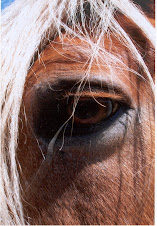
Other than a bit of stiffness in my side, I am unscathed, thanks to Tim Doyle, Morihei Ueshiba (the founder of Aikido), and Eddie. I ended my horse session by doing some Reiki on my mare’s swollen eye, during which she stepped on my foot.
I think I need to go back to the dojo.
Tuesday, July 12, 2011

Tuesday, June 14, 2011
Trash or treasure, sifting out photos
Our new home is officially ours and the cleaning and packing has begun. There are still repairs needed before we can move in, but while I work on painting, cleaning and organizing, my motto is “don’t drive to the new house without bringing something with.”
Because we won’t be officially moving until at least July, I am packing things that do not get used very often. I’ve already taken over several garbage bags of my yarn stash, but don’t worry, if I get an emergency knitting attack I still have plenty to choose from.
The other area I’m working on is photos. I’ve been taking photos since I was a child. My first introduction to the art of taking pictures was my grandmother using her Kodak Brownie camera. The Brownie was introduced in 1900, cost only $1 and was easy to use. It was the start of our love affair with all things pictured, leading up to the current day when photos of anything can be found on the internet.
I started taking photos with my own Brownie back in grade school. My favorite is a photo of my dog Buck standing with his front paws on the picnic table. I’ve taken photos of trips, pretty scenery, all my pets, family and friends.
Oh, the days of black and white and negatives. In the days before digital, each subject was taken several times to make sure at least one shot was not blurry and the subject’s eyes weren’t closed. Film came in rolls of 12, 24, and 36 shots and it was nearly sacrilege to get a roll developed without using all the shots available. It was also nearly sacrilege to throw away any of them.
As I began to pack the limitless supply of photos in my home, I decided it was time to break that rule. My husband and I sat in the livingroom with a garbage can and began to sort. There were rules to this sorting. Each of us had a stack of photo envelopes. All negatives went in the trash. All photos of scenery that were unidentifiable went in the trash. Photos of people we barely know, in situations we couldn’t remember, went in the trash. Duplicate photos went in the trash. Unfocused photos and red eye photos went in the trash. If we were unsure about a photo, we could consult each other, but only if it looked really important.
We also had rules for photos to keep. Anything that made us say, “Ohh, look at this,” was kept. At least five photos of each deceased pet were kept. Several shots of special occasions, weddings, birthdays, family gatherings, were kept. One or two blackmail photos were kept. (Blackmail photos include really unflattering photos of a relative, or a relative or friend doing something foolish).
These were just the loose photos. Last night, I began to go through the photo albums with the same rules. It felt a bit more invasive to throw away a photo I had put in an album, but it was needed.
I felt good about this cleaning project done. Then I began to go through a storage cabinet and found all my cameras. I have a large case with my deceased father-in-law’s old 35 mm film camera along with extra lenses, tri-pod devices, filters and more. I haven’t used this camera in years, but I couldn’t bring myself to part with it. There was also my old compact 35mm film camera with the optional flash attachment and my first digital camera.
An old camera is like an old friend. We had been through adventures together, and shared memories. In this fast-paced world, my old cameras let me stop time and save that fraction of a second for the future. And even though I had just thrown away many of those moments in time, the device that saved them didn’t go in the trash.
I now use a digital camera for nearly everything and I rarely get the photos printed. I have some saved on my computer but I’ve learned that when you allow time to pass and look back on the photos in your camera, they don’t seem as important as they did in the moment you took them.
I still have some archives of photos my grandmother took which I haven’t gotten the nerve to throw away yet. Her photos seem like history; mine are just memories. There’s a difference.
Perhaps it’s a sign of the times. In a constantly changing world, I’ve learned about the importance of the present moment, and the dangers of living in the past. Perhaps that is what enabled me to throw out the unneeded photos. I know all my experiences of the past have led me to who I am in the present. The memories remain, but we can’t go back.
I’m glad my grandmother kept the family photos, and I’m also glad I didn’t inherit her throw-aways. Perhaps when I have lived my life fully and gone, someone will say the same about what I leave behind.
Because we won’t be officially moving until at least July, I am packing things that do not get used very often. I’ve already taken over several garbage bags of my yarn stash, but don’t worry, if I get an emergency knitting attack I still have plenty to choose from.
The other area I’m working on is photos. I’ve been taking photos since I was a child. My first introduction to the art of taking pictures was my grandmother using her Kodak Brownie camera. The Brownie was introduced in 1900, cost only $1 and was easy to use. It was the start of our love affair with all things pictured, leading up to the current day when photos of anything can be found on the internet.
I started taking photos with my own Brownie back in grade school. My favorite is a photo of my dog Buck standing with his front paws on the picnic table. I’ve taken photos of trips, pretty scenery, all my pets, family and friends.
Oh, the days of black and white and negatives. In the days before digital, each subject was taken several times to make sure at least one shot was not blurry and the subject’s eyes weren’t closed. Film came in rolls of 12, 24, and 36 shots and it was nearly sacrilege to get a roll developed without using all the shots available. It was also nearly sacrilege to throw away any of them.
As I began to pack the limitless supply of photos in my home, I decided it was time to break that rule. My husband and I sat in the livingroom with a garbage can and began to sort. There were rules to this sorting. Each of us had a stack of photo envelopes. All negatives went in the trash. All photos of scenery that were unidentifiable went in the trash. Photos of people we barely know, in situations we couldn’t remember, went in the trash. Duplicate photos went in the trash. Unfocused photos and red eye photos went in the trash. If we were unsure about a photo, we could consult each other, but only if it looked really important.
We also had rules for photos to keep. Anything that made us say, “Ohh, look at this,” was kept. At least five photos of each deceased pet were kept. Several shots of special occasions, weddings, birthdays, family gatherings, were kept. One or two blackmail photos were kept. (Blackmail photos include really unflattering photos of a relative, or a relative or friend doing something foolish).
These were just the loose photos. Last night, I began to go through the photo albums with the same rules. It felt a bit more invasive to throw away a photo I had put in an album, but it was needed.
I felt good about this cleaning project done. Then I began to go through a storage cabinet and found all my cameras. I have a large case with my deceased father-in-law’s old 35 mm film camera along with extra lenses, tri-pod devices, filters and more. I haven’t used this camera in years, but I couldn’t bring myself to part with it. There was also my old compact 35mm film camera with the optional flash attachment and my first digital camera.
An old camera is like an old friend. We had been through adventures together, and shared memories. In this fast-paced world, my old cameras let me stop time and save that fraction of a second for the future. And even though I had just thrown away many of those moments in time, the device that saved them didn’t go in the trash.
I now use a digital camera for nearly everything and I rarely get the photos printed. I have some saved on my computer but I’ve learned that when you allow time to pass and look back on the photos in your camera, they don’t seem as important as they did in the moment you took them.
I still have some archives of photos my grandmother took which I haven’t gotten the nerve to throw away yet. Her photos seem like history; mine are just memories. There’s a difference.
Perhaps it’s a sign of the times. In a constantly changing world, I’ve learned about the importance of the present moment, and the dangers of living in the past. Perhaps that is what enabled me to throw out the unneeded photos. I know all my experiences of the past have led me to who I am in the present. The memories remain, but we can’t go back.
I’m glad my grandmother kept the family photos, and I’m also glad I didn’t inherit her throw-aways. Perhaps when I have lived my life fully and gone, someone will say the same about what I leave behind.
Wednesday, June 1, 2011
Ballet recital revisited
Some of you will remember a previous column where I described my granddaughter Wren’s first ballet recital. Remember the distracting feather? Last weekend, I attended her second recital. Just as before the first recital, her mother insisted this was her last performance. Dance lessons were too expensive and took too much time. She was not going to be enrolled in dance next season.
Wren is four years old. The recital was held at the Viterbo Fine Arts Center in La Crosse and it was a full house. The recital began at 7 p.m. and ended at 10 p.m. Wren’s part in the event lasted about three minutes.
As I sat in the audience, watching other people’s children perform their segments, part of me was bored. Each dance looked like the previous one, with different costumes. If you’ve ever been to a ballet recital, you know it is not exactly fine art. Polina Semionova or Fernando Bujones were not featured. However, the better side of me realized that each dancer on the stage was someone else’s Wren. Each dancer had a mother or father, grandparents and friends sitting on the edge of their seat in anticipation of their child’s moment in the spotlight, just as I was.
When I remembered this, I began to see the performances in a new light.
One dance I will always remember was called Daddies and Daughters. About 20 fathers entered the stage wearing black pants, white shirts and black ties. They were from nearly every walk of life, some tall, some short, some wide, some narrow, some balding, others young. From stage left emerged daughters from grade school to seniors to meet their daddies and dance. The easy choreography was set to a country song about a daughter growing up.
Some daughters were young and needed daddy’s help with the steps. Others were older and helped their father make it through. The look of pride the fathers held for their daughters, and the daughters held for their daddies, brought tears to my eyes. And I wasn’t the only one in the audience drying my eyes.
Finally, the moment came and Wren’s group stepped onto the stage wearing pink ballerina costumes and holding matching teddy bears. My eyes were glued to Wren, who tried very hard to remember her steps. I heard the rest of the audience laughing and looked down the line of ballerinas to see what was the cause. At the end of the line was one boy dancer, in a battle with the girl next to him over a teddy bear. The battle began to escalate and a teacher came on stage. She lifted the boy under the arms and placed him between two other dancers, distancing him from the girl whose teddy bear he coveted. The teacher exited stage left and the dance continued.
It’s always something, but at least this time it wasn’t a feather.
Though Wren didn’t do all of her dance steps, her time was to come at the finale. During the finale, all of the dancers come back on stage for a group dance. The smallest dancers were in front, and Wren was front and center, right behind the teacher. This was enough incentive for Wren to dance up a storm, still holding her teddy bear. When she noticed her father and grandpa in the fourth row of the audience, Wren tried to run off stage to greet them, but was captured by a teacher and returned to the chorus line.
When you are four years old, it doesn’t matter what kind of performance you gave, you still get roses like any star ballerina.
In the car on the way home, we reviewed the performance. I mentioned my favorite dance was the Daddy and Daughter dance. I said I imagined Wren and her daddy up there with the rest of the dancers.
“I know,” said Wren’s mother. “Wren said she wanted to do it next time. Now, I have to keep her in dance class so she can do that dance with her dad.”
To be continued ... next year.
Wren is four years old. The recital was held at the Viterbo Fine Arts Center in La Crosse and it was a full house. The recital began at 7 p.m. and ended at 10 p.m. Wren’s part in the event lasted about three minutes.
As I sat in the audience, watching other people’s children perform their segments, part of me was bored. Each dance looked like the previous one, with different costumes. If you’ve ever been to a ballet recital, you know it is not exactly fine art. Polina Semionova or Fernando Bujones were not featured. However, the better side of me realized that each dancer on the stage was someone else’s Wren. Each dancer had a mother or father, grandparents and friends sitting on the edge of their seat in anticipation of their child’s moment in the spotlight, just as I was.
When I remembered this, I began to see the performances in a new light.
One dance I will always remember was called Daddies and Daughters. About 20 fathers entered the stage wearing black pants, white shirts and black ties. They were from nearly every walk of life, some tall, some short, some wide, some narrow, some balding, others young. From stage left emerged daughters from grade school to seniors to meet their daddies and dance. The easy choreography was set to a country song about a daughter growing up.
Some daughters were young and needed daddy’s help with the steps. Others were older and helped their father make it through. The look of pride the fathers held for their daughters, and the daughters held for their daddies, brought tears to my eyes. And I wasn’t the only one in the audience drying my eyes.
Finally, the moment came and Wren’s group stepped onto the stage wearing pink ballerina costumes and holding matching teddy bears. My eyes were glued to Wren, who tried very hard to remember her steps. I heard the rest of the audience laughing and looked down the line of ballerinas to see what was the cause. At the end of the line was one boy dancer, in a battle with the girl next to him over a teddy bear. The battle began to escalate and a teacher came on stage. She lifted the boy under the arms and placed him between two other dancers, distancing him from the girl whose teddy bear he coveted. The teacher exited stage left and the dance continued.
It’s always something, but at least this time it wasn’t a feather.
Though Wren didn’t do all of her dance steps, her time was to come at the finale. During the finale, all of the dancers come back on stage for a group dance. The smallest dancers were in front, and Wren was front and center, right behind the teacher. This was enough incentive for Wren to dance up a storm, still holding her teddy bear. When she noticed her father and grandpa in the fourth row of the audience, Wren tried to run off stage to greet them, but was captured by a teacher and returned to the chorus line.
When you are four years old, it doesn’t matter what kind of performance you gave, you still get roses like any star ballerina.
In the car on the way home, we reviewed the performance. I mentioned my favorite dance was the Daddy and Daughter dance. I said I imagined Wren and her daddy up there with the rest of the dancers.
“I know,” said Wren’s mother. “Wren said she wanted to do it next time. Now, I have to keep her in dance class so she can do that dance with her dad.”
To be continued ... next year.
Tuesday, May 17, 2011
Generations of change remain the same
My grandmother was born in 1900 and passed away in 1998. I’ve often thought about those 98 years of my grandmother’s life and the many things she went through. She was born into a time of women’s suffrage, survived two world wars, various other wars, the great depression, the invention of nuclear weapons and energy, the telephone, radio and television, and the dawning of the computer age.
I was born in 1957. I remember racial riots, women’s liberation, putting men on the moon, Vietnam, economic booms and busts, global warming and constant inflation, walls crumbling and the first black president of the United States. And that’s only been the first 54 years.
My grandmother didn’t have a Facebook page and she never sent a tweet. She walked to the post office every day to get her mail and the latest news. She corresponded in writing with friends and relatives across the country and in Norway.
I have a Facebook page, a blog and email. I rarely send written letters, but I get email from friends in Europe and Japan.
My grandmother attended community events where she heard local people playing the music of the time. She had an old record player and a radio to listen to music and she visited the library for books and magazines.
I have two mp3 players, a Kindle and three computers. I have access to music from around the world and 3,500 books that I can carry with me wherever I go.
My grandmother started with horse drawn transportation. I have a photo she took on the farm of her horse Big King. She never had a drivers license and I don’t think she ever set foot in an airplane.
My horses are for recreation. I drive a car nearly every day, and am comfortable being lifted into the sky by a metal box and transported to another country. I won’t be surprised if transporter beams out of Star Trek are invented in my lifetime.
You can say that my life is very different from my grandmothers. And yet, I see similarities. So far, we’ve both lived through ages of transition and technological advances, wars, and economic ups and downs. And there are simple things that remain constant.
Living with horses, reading books, listening to music, visiting with friends, are all things my grandmother’s life and mine have in common.
My grandmother liked to do handwork, sewing and embroidery. I like to knit, sew, spin and weave. My grandmother liked to bake coffee cakes and cookies. I like to bake banana bread and chocolate chip cookies. My grandmother enjoyed tending to the flowers around her house and maintained a garden. I like to plant a garden and watch the hollyhocks bloom alongside the house.
My grandmother carried a basket wherever she went. I still have two of grandma’s baskets. In my house baskets hold my knitting, yarn, books, CDs, and kitchen utensils. I carry a basket to work with me containing my purse, my lunch, and whatever other things I need that day.
Hopefully I’ll have another 40 or 50 years to experience this life. I plan to be riding a horse when I’m 90. And no matter how much technology changes, I plan to remember those simple things I have in common with my grandmother. The smell of fresh mowed grass, the feel of sunshine on my face, creating beauty, good music and a good book, and the love of a good horse.
I was born in 1957. I remember racial riots, women’s liberation, putting men on the moon, Vietnam, economic booms and busts, global warming and constant inflation, walls crumbling and the first black president of the United States. And that’s only been the first 54 years.
My grandmother didn’t have a Facebook page and she never sent a tweet. She walked to the post office every day to get her mail and the latest news. She corresponded in writing with friends and relatives across the country and in Norway.
I have a Facebook page, a blog and email. I rarely send written letters, but I get email from friends in Europe and Japan.
My grandmother attended community events where she heard local people playing the music of the time. She had an old record player and a radio to listen to music and she visited the library for books and magazines.
I have two mp3 players, a Kindle and three computers. I have access to music from around the world and 3,500 books that I can carry with me wherever I go.
My grandmother started with horse drawn transportation. I have a photo she took on the farm of her horse Big King. She never had a drivers license and I don’t think she ever set foot in an airplane.
My horses are for recreation. I drive a car nearly every day, and am comfortable being lifted into the sky by a metal box and transported to another country. I won’t be surprised if transporter beams out of Star Trek are invented in my lifetime.
You can say that my life is very different from my grandmothers. And yet, I see similarities. So far, we’ve both lived through ages of transition and technological advances, wars, and economic ups and downs. And there are simple things that remain constant.
Living with horses, reading books, listening to music, visiting with friends, are all things my grandmother’s life and mine have in common.
My grandmother liked to do handwork, sewing and embroidery. I like to knit, sew, spin and weave. My grandmother liked to bake coffee cakes and cookies. I like to bake banana bread and chocolate chip cookies. My grandmother enjoyed tending to the flowers around her house and maintained a garden. I like to plant a garden and watch the hollyhocks bloom alongside the house.
My grandmother carried a basket wherever she went. I still have two of grandma’s baskets. In my house baskets hold my knitting, yarn, books, CDs, and kitchen utensils. I carry a basket to work with me containing my purse, my lunch, and whatever other things I need that day.
Hopefully I’ll have another 40 or 50 years to experience this life. I plan to be riding a horse when I’m 90. And no matter how much technology changes, I plan to remember those simple things I have in common with my grandmother. The smell of fresh mowed grass, the feel of sunshine on my face, creating beauty, good music and a good book, and the love of a good horse.
Wednesday, April 6, 2011
Mining the secrets among the debris
Buying land mid-winter can be tricky. You never know what will reveal itself when the snow melts. Sometimes it is great beauty, sometimes not so great. This time, our new land has quite a few of the not-so-great items revealing themselves.
Old farmland is notorious for having areas that could gently be referred to as ‘antique collections,’ These collections may be in a pile, or left randomly over the land. Ours is both. At our soon to be new home, the antique collections were scattered and left in piles in ravines. Even after the snow is melted, some of these treasures will still be hidden under the years of grasses grown among the remnants of someone else’s life.
Engines, old farm machinery, vintage snowmobiles, parts, tires, and more were discarded over the years.
One unique feature of this land is the burned-out mobile home vacated by the previous owners. It has been a somewhat surreal experience cleaning up this part of the collection of history.
As I stood in what was left of the bathroom, discarding the burned contents of the medicine cabinet, I started to think about the family who lived there before the fire. I realized I was not just throwing away old trash as much as I was removing the story of a family’s loss.
The abandoned combs and brushes, toothpaste, and various hair clips told me it was likely a family rather than a single person. In what is left of the living-room, I could tell they liked country music and had quite a collection of CDs, now melted into their packaging. A bookshelf of charred video cassettes remained, their titles now unreadable. The only book I found is a small copy of “Little House on the Prairie.”
They had a fully-stocked larder of canned goods at the time of the fire, including several cans of Dinty Moore beef stew. The rest of the cans are rusted beyond recognition, their labels charred. Their dishes were a mismatched collection of china and plastic. Though the trailer is now a mess of insulation-covered debris, the remains of a vacumn cleaner and the usual cleaning products under the kitchen sink tell me they tried to keep an orderly household. From the back bedroom, I ascertained that they wore jeans and sweatshirts and liked down pillows. And at least one member of the household did not adhere to the orderly scenario.
A half-full container of cat litter and a bottle of dog shampoo tells me they had pets. A circular saw hints that an occupant liked to work with tools.
From the burn pattern, I can tell the fire started in the livingroom, probably in the wall or near the small woodstove left behind. At least one of the two couches in the livingroom appears to have been a hide-a-bed. Perhaps the family had frequent visitors.
What is not left tells as much as what is. There are no crystal chandeliers, no piano, no crib or baby bottles, and no computer. We found several destroyed television sets and the remains of video game accessories. This was a family who lived on a moderate income, yet could afford food and a few extras.
Why was the mobile home left and not removed by the family? I’ll probably never know, but the expense of bringing in a dumpster and finding ways to dispose of the appliances and possible hazardous waste buried under the pile was a factor in what we offered for the property. Maybe it was a factor for the family, too. Perhaps they didn’t have insurance or the physical ability to remove the trash.
Perhaps after suffering this loss, they didn’t have the emotional capacity to look the fire in the eye. As I toss out what is left, piece by piece, I pray the family was not physically harmed by the fire and that Fido and Mouser were saved. It’s hard to imagine that having your home destroyed would not leave some emotional harm, and I hope the family has been able to rebuild their life in the years since this tragedy happened.
For my husband and I, buying this home is a challenge of recovery. We will renovate the existing house and wonder what happy celebrations occurred in the spacious kitchen, and what were they thinking when they painted the bedroom purple? I’ll look at the face of the unidentified soldier in the photo I found in a closet and hope he made it back from his experience in the military to enjoy home-cooked meals on the wheat-designed dishes gently packed away in a box in the upstairs bedroom.
We will wade through the ‘antique collections’ and other debris and find the spirit and beauty of the land once more. And I’ll gaze out my new kitchen window at the expanse of fields between us and the Penokee Mountain range and remember the ancestors who came to this land, built homes and farms, and have now moved on.
Old farmland is notorious for having areas that could gently be referred to as ‘antique collections,’ These collections may be in a pile, or left randomly over the land. Ours is both. At our soon to be new home, the antique collections were scattered and left in piles in ravines. Even after the snow is melted, some of these treasures will still be hidden under the years of grasses grown among the remnants of someone else’s life.
Engines, old farm machinery, vintage snowmobiles, parts, tires, and more were discarded over the years.
One unique feature of this land is the burned-out mobile home vacated by the previous owners. It has been a somewhat surreal experience cleaning up this part of the collection of history.
As I stood in what was left of the bathroom, discarding the burned contents of the medicine cabinet, I started to think about the family who lived there before the fire. I realized I was not just throwing away old trash as much as I was removing the story of a family’s loss.
The abandoned combs and brushes, toothpaste, and various hair clips told me it was likely a family rather than a single person. In what is left of the living-room, I could tell they liked country music and had quite a collection of CDs, now melted into their packaging. A bookshelf of charred video cassettes remained, their titles now unreadable. The only book I found is a small copy of “Little House on the Prairie.”
They had a fully-stocked larder of canned goods at the time of the fire, including several cans of Dinty Moore beef stew. The rest of the cans are rusted beyond recognition, their labels charred. Their dishes were a mismatched collection of china and plastic. Though the trailer is now a mess of insulation-covered debris, the remains of a vacumn cleaner and the usual cleaning products under the kitchen sink tell me they tried to keep an orderly household. From the back bedroom, I ascertained that they wore jeans and sweatshirts and liked down pillows. And at least one member of the household did not adhere to the orderly scenario.
A half-full container of cat litter and a bottle of dog shampoo tells me they had pets. A circular saw hints that an occupant liked to work with tools.
From the burn pattern, I can tell the fire started in the livingroom, probably in the wall or near the small woodstove left behind. At least one of the two couches in the livingroom appears to have been a hide-a-bed. Perhaps the family had frequent visitors.
What is not left tells as much as what is. There are no crystal chandeliers, no piano, no crib or baby bottles, and no computer. We found several destroyed television sets and the remains of video game accessories. This was a family who lived on a moderate income, yet could afford food and a few extras.
Why was the mobile home left and not removed by the family? I’ll probably never know, but the expense of bringing in a dumpster and finding ways to dispose of the appliances and possible hazardous waste buried under the pile was a factor in what we offered for the property. Maybe it was a factor for the family, too. Perhaps they didn’t have insurance or the physical ability to remove the trash.
Perhaps after suffering this loss, they didn’t have the emotional capacity to look the fire in the eye. As I toss out what is left, piece by piece, I pray the family was not physically harmed by the fire and that Fido and Mouser were saved. It’s hard to imagine that having your home destroyed would not leave some emotional harm, and I hope the family has been able to rebuild their life in the years since this tragedy happened.
For my husband and I, buying this home is a challenge of recovery. We will renovate the existing house and wonder what happy celebrations occurred in the spacious kitchen, and what were they thinking when they painted the bedroom purple? I’ll look at the face of the unidentified soldier in the photo I found in a closet and hope he made it back from his experience in the military to enjoy home-cooked meals on the wheat-designed dishes gently packed away in a box in the upstairs bedroom.
We will wade through the ‘antique collections’ and other debris and find the spirit and beauty of the land once more. And I’ll gaze out my new kitchen window at the expanse of fields between us and the Penokee Mountain range and remember the ancestors who came to this land, built homes and farms, and have now moved on.
Thursday, March 31, 2011
Old barns and haylofts
I’ve had the good fortune to spend considerable time in haylofts, some sizable, others sparse. There are as many different shapes and sizes of haylofts as there are old country barns. Still, most hay lofts have certain things in common.
Hay lofts smell the best in late summer when the fresh baled harvest of the year is piled high. It is the verdant smell of a season of sunshine, rain, breezes and mother earth leaking out the cut ends of each blade of grass. If you sit in a hay loft in mid-winter, there is still a lingering of those elements, mingled with the fine dust of old barn boards and gravel roads.
Hay lofts are not a place for the feint-of-heart. Old barn boards get creaky, announcing their age with every step. Knots fall out of pine floor boards, allowing rays of light to peak through. Old machinery, such as rusted elevators, hides in the recesses and dark corners.
Hay lofts are attractive places for the wild members of the farm family. Raccoons have been known to rear their young nestled between bales. Young pigeons take their first flight practice over the mounds of hay. And barn cats lie in wait to challenge intruders large and small.
I’ve been in hay lofts in early spring when most of the year’s hay has been consumed. Spring hay lofts are spacious and airy. There’s a feel of expectation for the arrival of the coming crop. I’ve been in hay lofts in mid-summer when the sounds are of young boys calling to each other as new bales are stacked, and the smell is the sweat of old men trying to keep up.
I’ve been in haylofts in early fall when the air is crisp and the smell of summer mingles with the falling leaves. One can sit in the doorway resting against a mound of hay and contemplate the changing seasons, sometimes watching the deer pick through the last morsels in the far-off fields. I’ve been in hay lofts where the smell of mold and decay represent the ghosts of a farm long neglected.
At The Equestrian Cooperative, where I am a board member, we don’t have a hay loft. And though we won’t be able to sit on the high perch of the hay loft door, we’ll still be able to enjoy the smells and scenes of a fresh crop of hay stacked and waiting for the horses’ pleasure in our hay storage building. Hopefully, some of that harvest will come from the AERC land; organic hay, maybe even harvested with horse-power.
Hay lofts smell the best in late summer when the fresh baled harvest of the year is piled high. It is the verdant smell of a season of sunshine, rain, breezes and mother earth leaking out the cut ends of each blade of grass. If you sit in a hay loft in mid-winter, there is still a lingering of those elements, mingled with the fine dust of old barn boards and gravel roads.
Hay lofts are not a place for the feint-of-heart. Old barn boards get creaky, announcing their age with every step. Knots fall out of pine floor boards, allowing rays of light to peak through. Old machinery, such as rusted elevators, hides in the recesses and dark corners.
Hay lofts are attractive places for the wild members of the farm family. Raccoons have been known to rear their young nestled between bales. Young pigeons take their first flight practice over the mounds of hay. And barn cats lie in wait to challenge intruders large and small.
I’ve been in hay lofts in early spring when most of the year’s hay has been consumed. Spring hay lofts are spacious and airy. There’s a feel of expectation for the arrival of the coming crop. I’ve been in hay lofts in mid-summer when the sounds are of young boys calling to each other as new bales are stacked, and the smell is the sweat of old men trying to keep up.
I’ve been in haylofts in early fall when the air is crisp and the smell of summer mingles with the falling leaves. One can sit in the doorway resting against a mound of hay and contemplate the changing seasons, sometimes watching the deer pick through the last morsels in the far-off fields. I’ve been in hay lofts where the smell of mold and decay represent the ghosts of a farm long neglected.
At The Equestrian Cooperative, where I am a board member, we don’t have a hay loft. And though we won’t be able to sit on the high perch of the hay loft door, we’ll still be able to enjoy the smells and scenes of a fresh crop of hay stacked and waiting for the horses’ pleasure in our hay storage building. Hopefully, some of that harvest will come from the AERC land; organic hay, maybe even harvested with horse-power.
Wednesday, March 23, 2011
Spring cleaning: watch for hidden trolls
As spring creeps in, melting snow reveals treasures hidden underneath. Many begin to think about spring cleaning. Those of us who are of Scandinavian descent know to watch for trolls.
After 13 years of having my grandmother’s nativity set on display year-round in my china cabinet, I decided it was time for a change. I rummaged through the upstairs closet and brought out the storage boxes for the set. One box is labeled with the contents and date of purchase of the original set by my grandmother. Over the years, new pieces were added and the set now requires four boxes to hold these treasures.
After affectionately nestling each piece in cotton and quilt batting, I put the boxes back in the closet. Now I was able to bring out the pretty dishes from their 13 year hiatus in the bottom of the cabinet. As I reached my arm far into the back corner, I discovered the trolls.
When I was a small child, one of my favorite toys was my trolls. I still have two of the four-inch high, plastic creatures; one male and one female. When you count their orange hair, they are a good eight inches high. Large ears, full cheeks, and a bulbous nose grace their faces and eyes bigger than a Disney heroine are prominent. Four-fingered hands reach out from short arms, as if ready to give everyone they meet a hug. Four-toed feed on short, stubby legs keep them securely upright, balancing their extended bellies above.
How do you tell a male troll from a female? By their clothing, of course.
My Norwegian grandmother sat at her treadle sewing machine (which I still have) and sewed clothes for our trolls as birthday and Christmas presents. These gifts were usually made from felt, with two holes cut for arms. I know which troll is female because her clothes are decorated with lace or ribbons.
My trolls have been waiting to take their place on display in the cabinet, but they haven’t been idle during those 13 years. I know this because along with them, I pulled out a small baby troll, about an inch high with pink hair and bunny slippers on her feet. Trolls multiply when left unattended.
There are many Scandinavian legends of trolls. Most legends talk of large, hairy creatures hiding under bridges, ready to eat small children who pass overhead. My trolls wouldn’t hurt anyone. I look at their wide, childish smiles and it makes me smile along with them. I spent many hours as a child dressing them, talking to them and having adventures with them. My trolls didn’t live under bridges with wet, rocky beds. My trolls had houses made from cardboard boxes with their own soft beds.
Children today may have fancy electronic games and dolls with digital cards to make them talk, but in my day, we had trolls. We had trolls on top of our pencils, trolls on our notebooks, and hidden in our lunch boxes. We were in charge of creating their lives, the games they played and their vocabulary, which I remember was at about the intelligence of a five year old.
My husband and I will be moving this summer to a new home, so spring cleaning has taken on a different tone for us this year. Packing up what is needed and throwing out what is not is on a larger scale.
When my husband saw me gazing at my troll family, he said, “I guess it’s time to throw those out, huh?”
Horror struck. Throw out my trolls?
“Not on your life,” I said.
There are a few things I may not use daily, but they are still needed. Things like my grandmother’s mixing bowls, her set of sleigh bells, and my trolls.
People may wonder what great age trolls live to be. Mine are currently about 50 years old, and they haven’t changed a bit.
After 13 years of having my grandmother’s nativity set on display year-round in my china cabinet, I decided it was time for a change. I rummaged through the upstairs closet and brought out the storage boxes for the set. One box is labeled with the contents and date of purchase of the original set by my grandmother. Over the years, new pieces were added and the set now requires four boxes to hold these treasures.
After affectionately nestling each piece in cotton and quilt batting, I put the boxes back in the closet. Now I was able to bring out the pretty dishes from their 13 year hiatus in the bottom of the cabinet. As I reached my arm far into the back corner, I discovered the trolls.
When I was a small child, one of my favorite toys was my trolls. I still have two of the four-inch high, plastic creatures; one male and one female. When you count their orange hair, they are a good eight inches high. Large ears, full cheeks, and a bulbous nose grace their faces and eyes bigger than a Disney heroine are prominent. Four-fingered hands reach out from short arms, as if ready to give everyone they meet a hug. Four-toed feed on short, stubby legs keep them securely upright, balancing their extended bellies above.
How do you tell a male troll from a female? By their clothing, of course.
My Norwegian grandmother sat at her treadle sewing machine (which I still have) and sewed clothes for our trolls as birthday and Christmas presents. These gifts were usually made from felt, with two holes cut for arms. I know which troll is female because her clothes are decorated with lace or ribbons.
My trolls have been waiting to take their place on display in the cabinet, but they haven’t been idle during those 13 years. I know this because along with them, I pulled out a small baby troll, about an inch high with pink hair and bunny slippers on her feet. Trolls multiply when left unattended.
There are many Scandinavian legends of trolls. Most legends talk of large, hairy creatures hiding under bridges, ready to eat small children who pass overhead. My trolls wouldn’t hurt anyone. I look at their wide, childish smiles and it makes me smile along with them. I spent many hours as a child dressing them, talking to them and having adventures with them. My trolls didn’t live under bridges with wet, rocky beds. My trolls had houses made from cardboard boxes with their own soft beds.
Children today may have fancy electronic games and dolls with digital cards to make them talk, but in my day, we had trolls. We had trolls on top of our pencils, trolls on our notebooks, and hidden in our lunch boxes. We were in charge of creating their lives, the games they played and their vocabulary, which I remember was at about the intelligence of a five year old.
My husband and I will be moving this summer to a new home, so spring cleaning has taken on a different tone for us this year. Packing up what is needed and throwing out what is not is on a larger scale.
When my husband saw me gazing at my troll family, he said, “I guess it’s time to throw those out, huh?”
Horror struck. Throw out my trolls?
“Not on your life,” I said.
There are a few things I may not use daily, but they are still needed. Things like my grandmother’s mixing bowls, her set of sleigh bells, and my trolls.
People may wonder what great age trolls live to be. Mine are currently about 50 years old, and they haven’t changed a bit.
Subscribe to:
Comments (Atom)


 Posts
Posts

